Target User 1
Spontaneous friend groups
Need a fast way to align on what sounds fun right now without opening a long, unfocused thread.
Momentum first
Case Study
Vymble is a mobile concept for helping friend groups break routines, align on mood, and land on something worth doing together before momentum fades.
Overview
Problem
Friend groups usually want the same thing at the same time, something easy, fun, and a little different. Planning still breaks down because the conversation starts too broad and nobody wants to force the final decision.
Audience
Friend groups who want spontaneous hangouts but still need a lightweight way to agree on a plan everyone feels good about.
Role
Research synthesis, concept strategy, product flow design, interface design, and prototype storytelling.
Scope
Define a mood-first entry point, design the shared decision loop, and shape supporting states like plans, favorites, and surprise prompts.
Outcome
A polished mobile concept that turns group energy into clearer suggestions, faster decisions, and plans that feel more likely to happen.
Most groups do not need more recommendation depth. They need a way to move past the familiar group-chat spiral where ideas get buried, nobody wants to decide for everyone, and the default becomes doing the same thing again.
Friction
Broad planning threads stay open too long, so even motivated groups lose momentum before they can commit.
Product Bet
If the first interaction feels playful, social, and low-pressure, the group is more likely to keep moving toward a real plan.
The same core behavior showed up across interviews. People wanted faster alignment without turning hangout planning into admin work.
Target User 1
Need a fast way to align on what sounds fun right now without opening a long, unfocused thread.
Momentum first
Target User 2
Need lightweight structure so one person is not stuck driving every decision while everyone else reacts late.
Shared ownership
Target User 3
Need prompts that push beyond repeat routines, while still feeling realistic for time, energy, and budget.
Routine breaker
Secondary research, interviews, and synthesis all pointed to the same product direction. Reduce social friction first, then make good ideas easier to act on.
Routine fatigue is real
Friend groups often default to the same weekend patterns because familiar plans are easier than reopening the whole conversation from scratch.
Decision fatigue kills the vibe
Once planning starts to feel like work, the energy drops fast. The group needs a lighter first step than browsing everything.
Shared memories still matter
People want more than a recommendation list. They want plans, favorites, and memory cues that make each new decision feel personal.
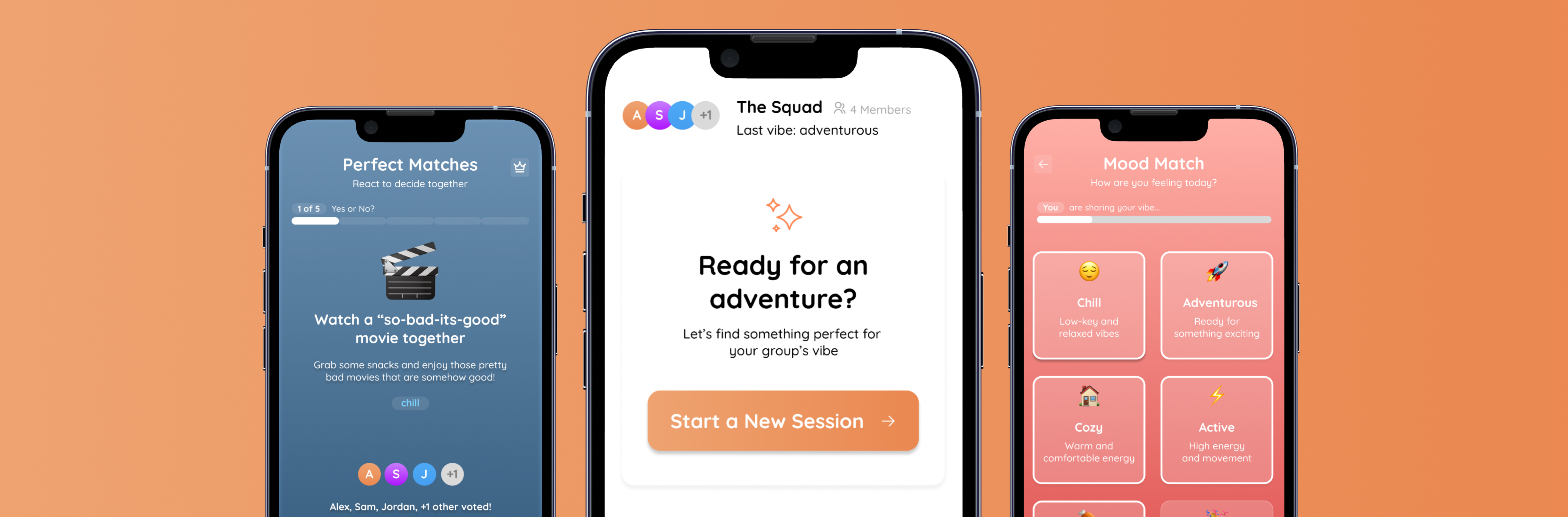
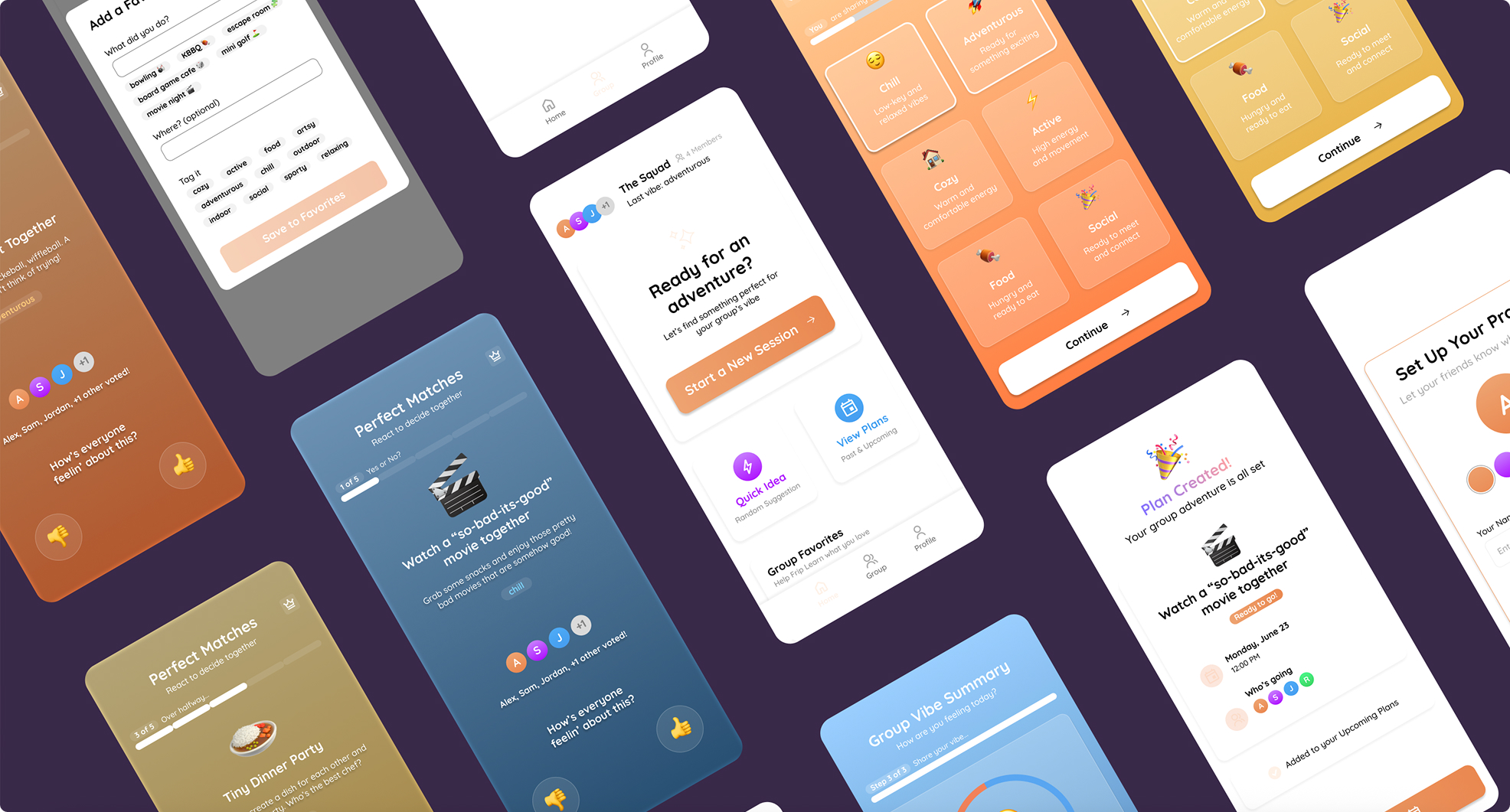
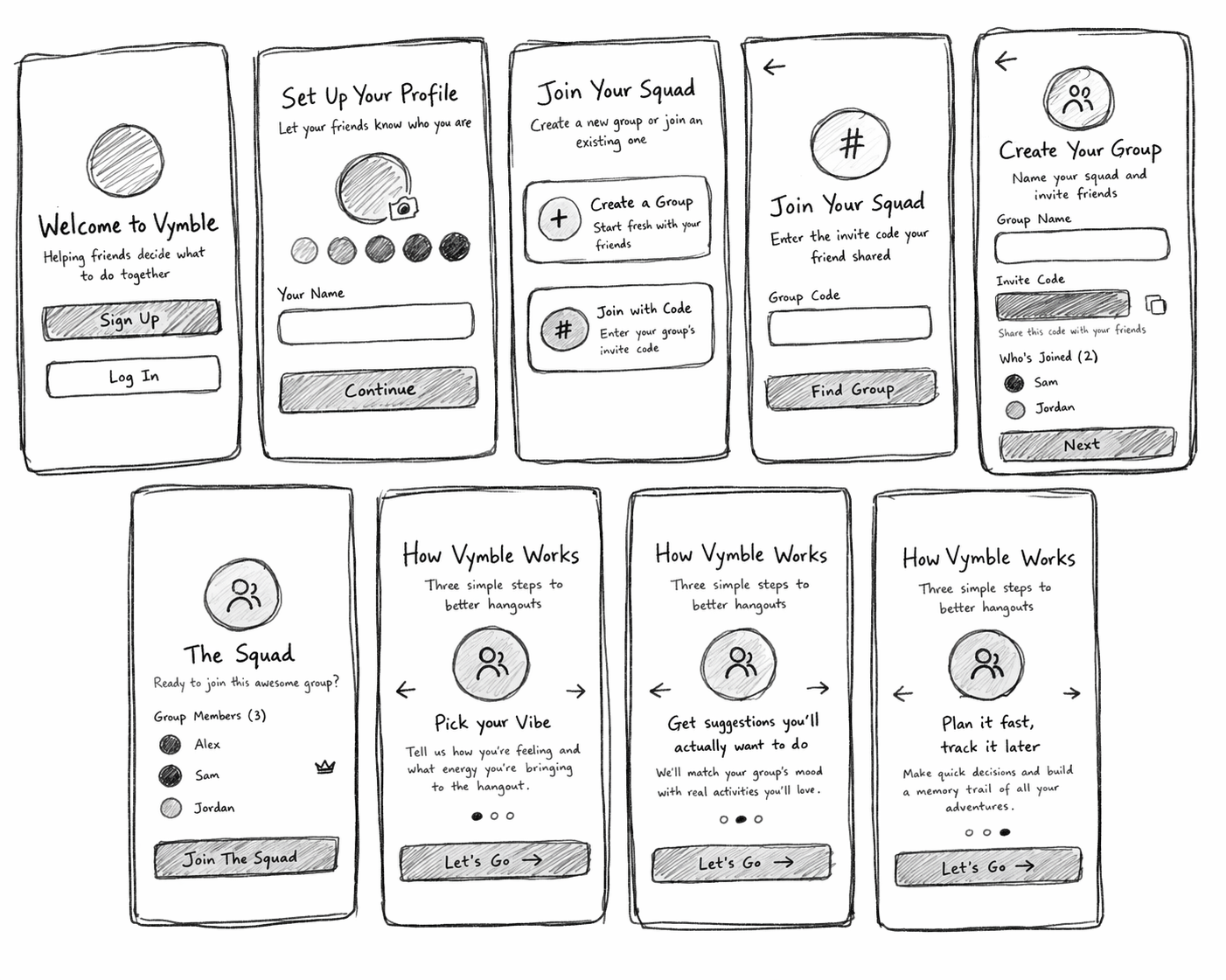
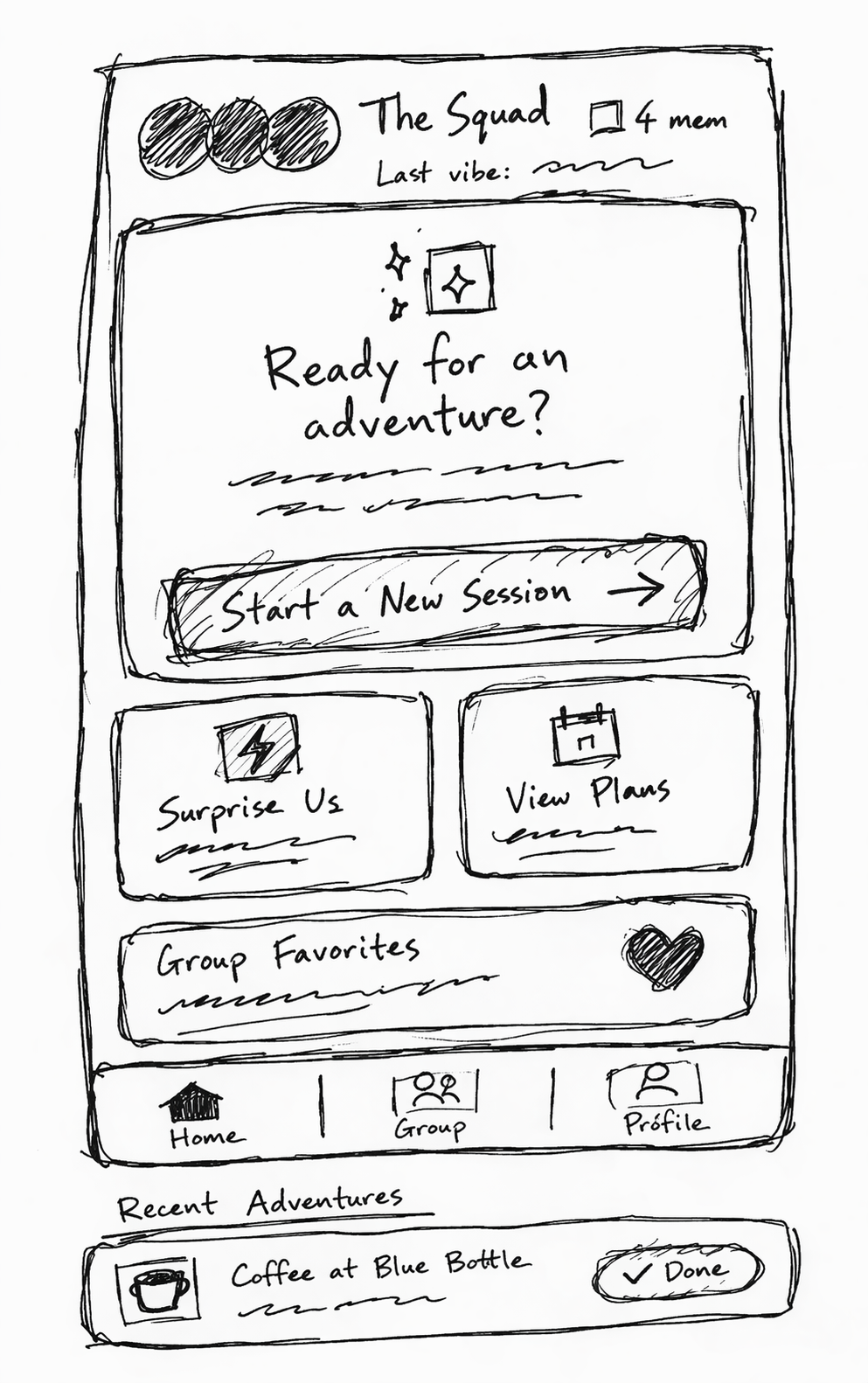
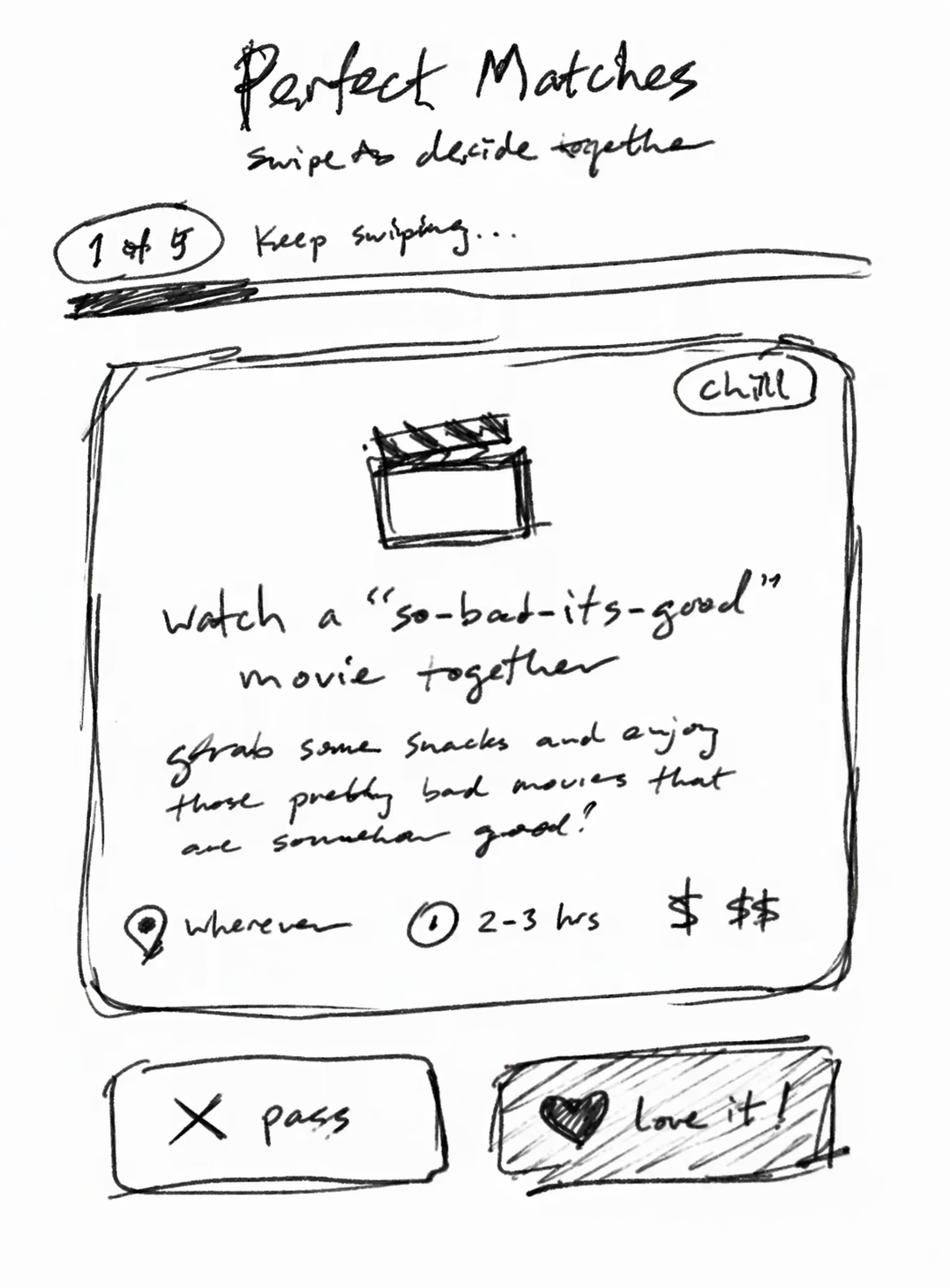
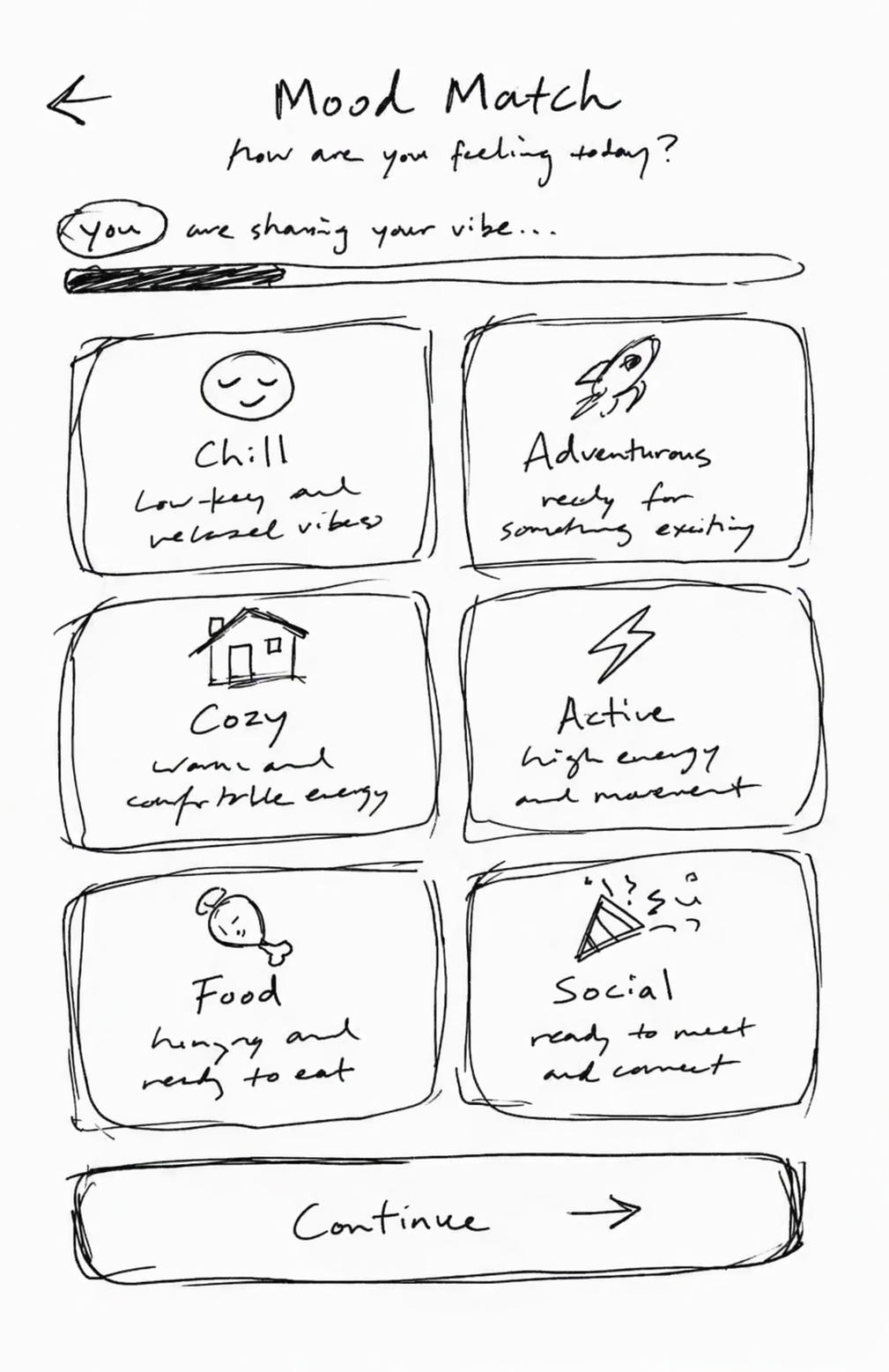
These early boards show how Vymble moved from rough onboarding ideas into clearer group-home, voting, and mood-selection flows before the visual system was refined.
Early concept
The earliest pass tested how profile setup, invite flow, and how-Vymble-works moments could get a group into motion without overexplaining the product.
Early concept
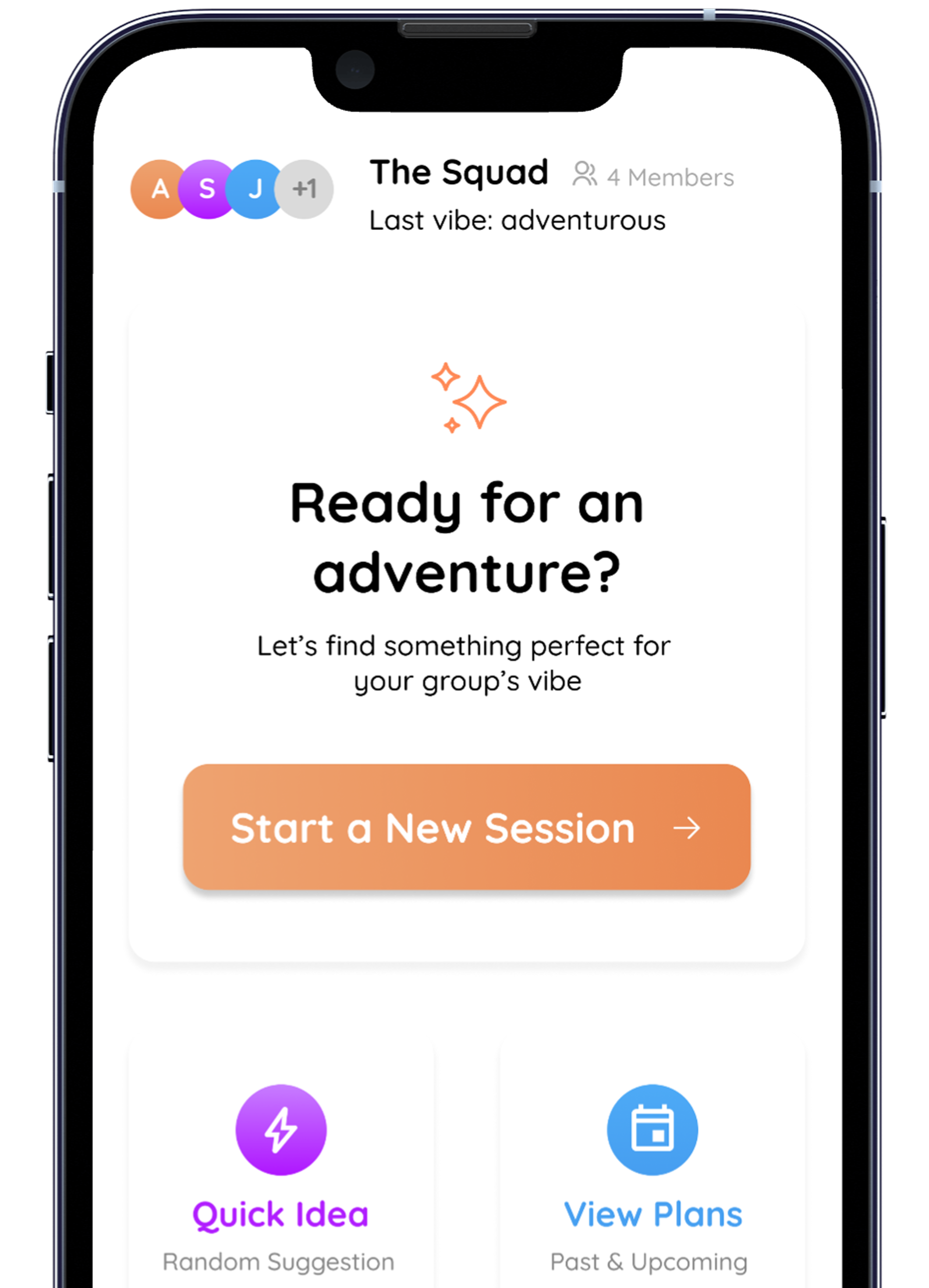
This sketch explored the shared home surface that keeps plans, availability, and friend activity visible without dropping back into group-chat chaos.
Early concept
The decision loop started to tighten here, with quick reactions and swipes helping the group see where momentum was building around one idea.
Early concept
This round established the mood-first entry point, testing how six vibe options could narrow choices before anyone had to browse a long list.
Before
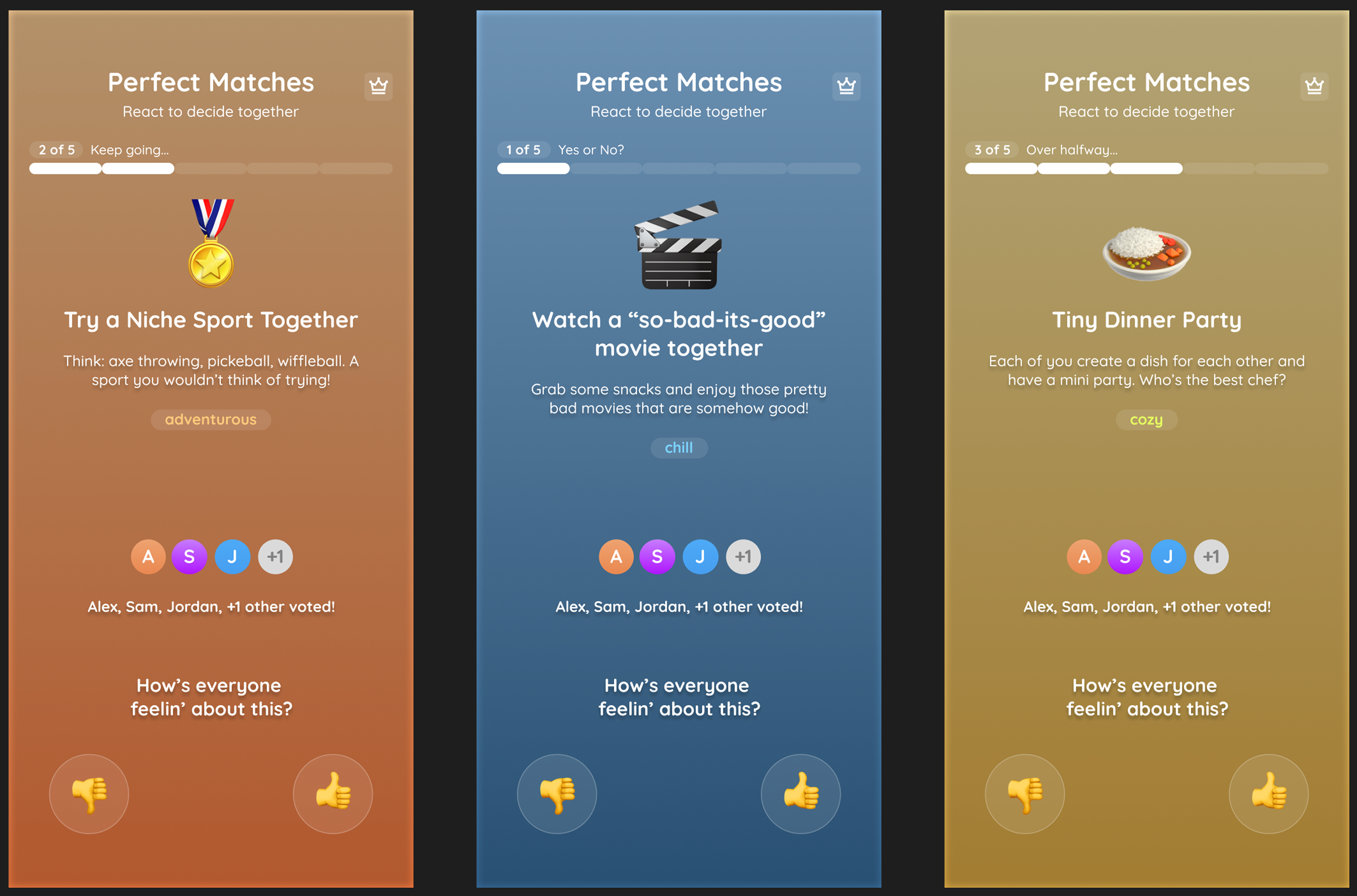
Early prompt cards were useful but too plain, which made choosing feel less exciting and less memorable.
After
Color-coded mood states and clearer reaction cues made suggestions easier to read and more desirable to act on.
The refinement pass focused on in-product suggestion states, not slide storytelling, so behavior changes stayed tied to the actual Vymble flow.
Mood is not decoration. It is the system that narrows choices early, influences suggestion tone, and helps groups feel seen without extra setup.
Depends on Faster consensus for low-energy nights
Low-key options for winding down together when the group wants minimal effort.
Depends on Better fit for close-knit hangouts
Comfort-first ideas built for warm, familiar, and slower social plans.
Depends on Stronger group participation cues
Conversation-led prompts that keep interaction high and awkwardness low.
Depends on Routine-breaking recommendation bias
Novelty-oriented ideas that push groups beyond default routines.
Depends on Time-and-effort aware filtering
Higher-energy options for movement, games, and physically engaging plans.
Depends on Shared budget and location context
Food-led prompts for groups that connect best around meals and shared tasting moments.
Speed
Mood becomes the shortcut. Instead of browsing first, the group gives Vymble direction in a few taps.
Alignment
The shared vibe summary lets everyone see the same starting point before suggestions are generated.
The mood-match flow is Vymble's core product move. It narrows the conversation early enough that suggestions feel personal and the group stays in motion.
Shared Context
The group sees the same plan details, participants, and timing without decisions disappearing back into chat.
Follow-through
Plans feel more real once they are saved, scheduled, and easy to revisit in one place.
Vymble turns the moment after a good suggestion into something tangible. The app keeps the next hangout concrete enough for people to follow through.
Quick Win
Surprise suggestions give a fast answer when nobody wants to debate, while staying grounded in learned group preferences.
Tone
The feature stays playful instead of gimmicky because spontaneity is framed as a shortcut, not a replacement for taste.
The surprise flow gives Vymble a different kind of momentum. It keeps planning light when the group wants one strong idea now.
Favorites reduce repeat setup, while clearer prompt presentation helps groups react faster without overthinking every option.
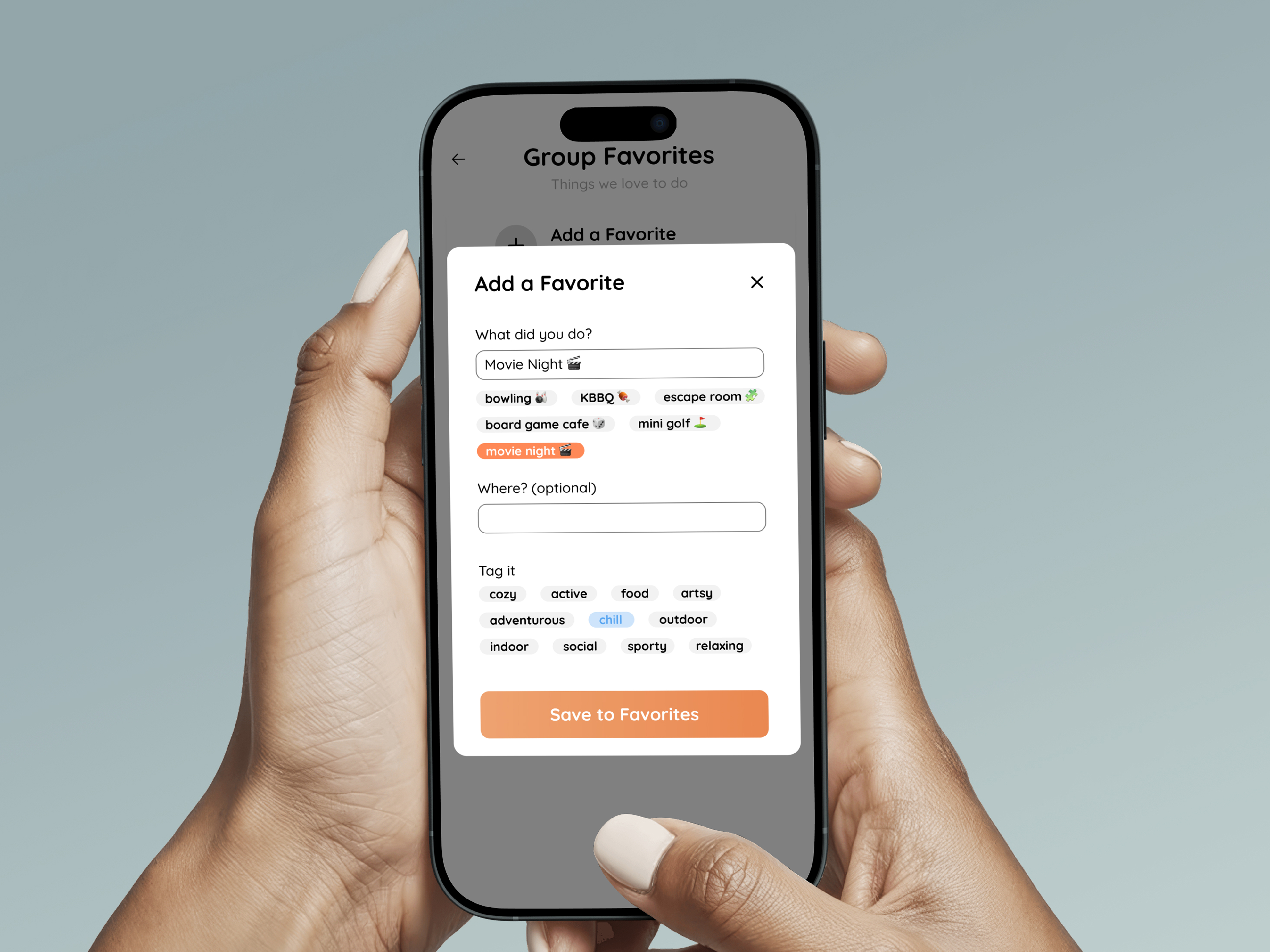
Saving proven ideas gives the product memory. Groups can tag what worked and restart future planning with less effort.
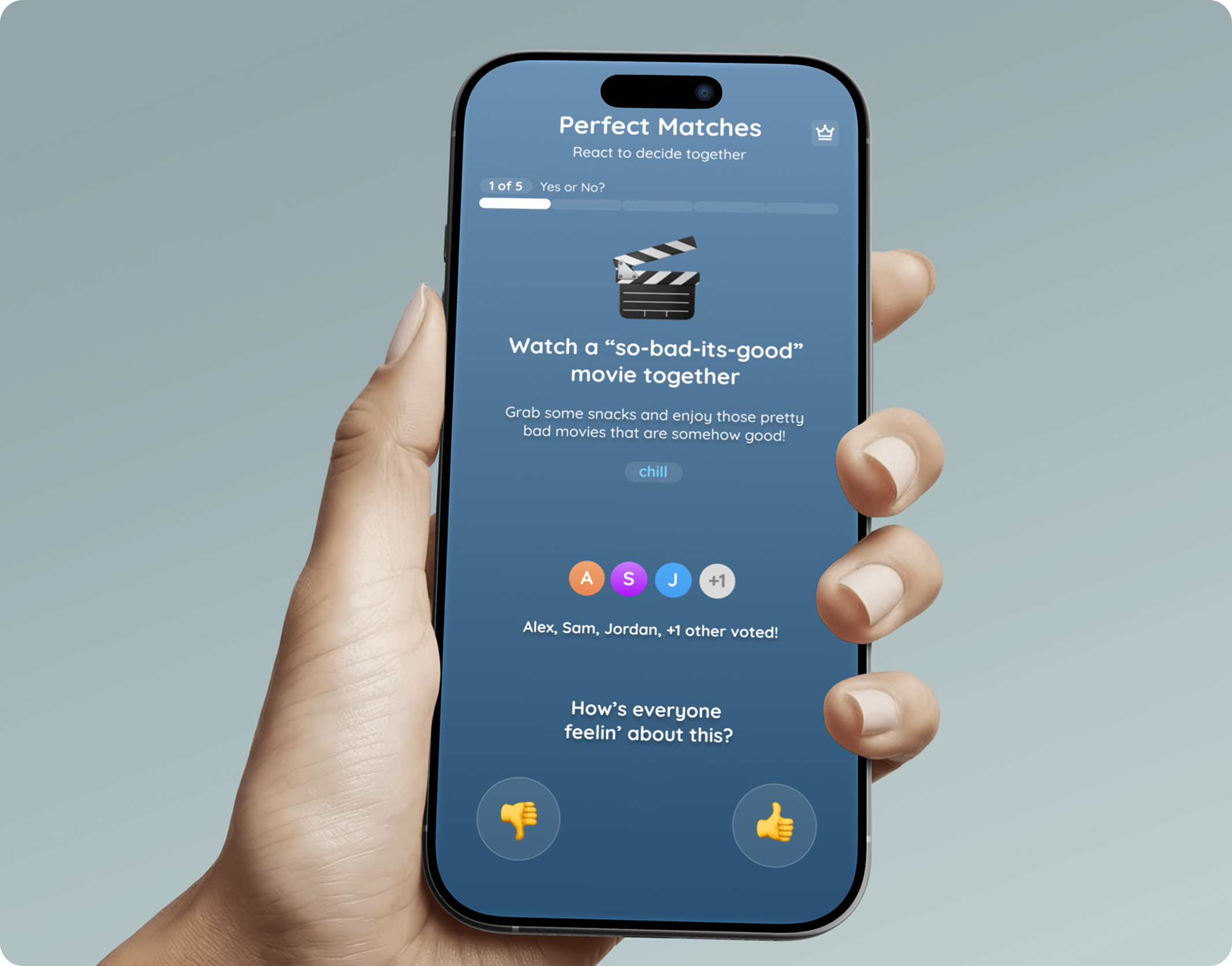
Handheld mockups show how mood-coded cards and simple vote cues make group reactions legible at a glance.
Instead of asking groups to browse everything first, Vymble narrows the conversation around vibe, reaction, and follow-through. The concept stays playful enough for spontaneous use, but structured enough to help people commit to a real plan.
Core Loop
Mood match to committed plan
Product Bet
Low-friction group alignment
Supporting Layer
Plans, favorites, and surprise prompts
Takeaways